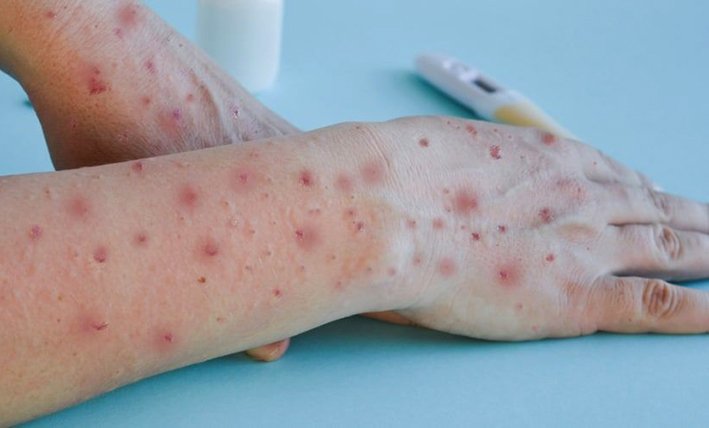
Bloomberg: The World Health Organization (WHO) opted against calling the recent monkeypox outbreak a public health emergency of international concern.
The outbreak is “clearly an evolving threat,” the WHO said in a statement, though it doesn’t constitute an international public health emergency “at this moment.” An emergency committee convened to discuss the outbreak.
“What makes the current outbreak especially concerning is the rapid, continuing spread into new countries and regions and the risk of further, sustained transmission into vulnerable populations including people that are immunocompromised, pregnant women and children,” according to the statement. “It requires our collective attention and coordinated action now to stop the further spread of monkeypox virus.”
The emergency status known as PHEIC — pronounced “fake” — applies to an extraordinary event that carries a public-health risk via the international spread of a disease, and one that potentially requires a coordinated response.
The last PHEIC was the coronavirus outbreak, which was labeled as such at the end of January 2020. It’s the WHO’s highest alert level and can be used to encourage nations to cooperate on countermeasures, while letting the agency recommend steps such as travel advisories.
The cousin of the smallpox virus has mostly been confined to developing countries for years, but has spread across Europe and the US in recent months. The pathogen typically causes flu-like symptoms, followed by a rash that often starts on the face and spreads down the belly. The illness often lasts for two weeks to a month and can be deadly.
Numerous cases occurred in people between the ages of 31 to 40, and the majority of them were in male patients, according to the WHO.
More than 2,700 cases throughout the European region have already been recorded but no deaths have been reported so far.
31-07-2022
Abu Dhabi to provide...
31-07-2022
US plans September Covid...
29-07-2022
SEHA to close Al...

29-07-2022
Dubai Health Authority achieves...